&geometry(187x114) "ESANZ")
New ASE Guidelines on Preventing Work-Related Musculoskeletal Disorders for Cardiac Sonographers
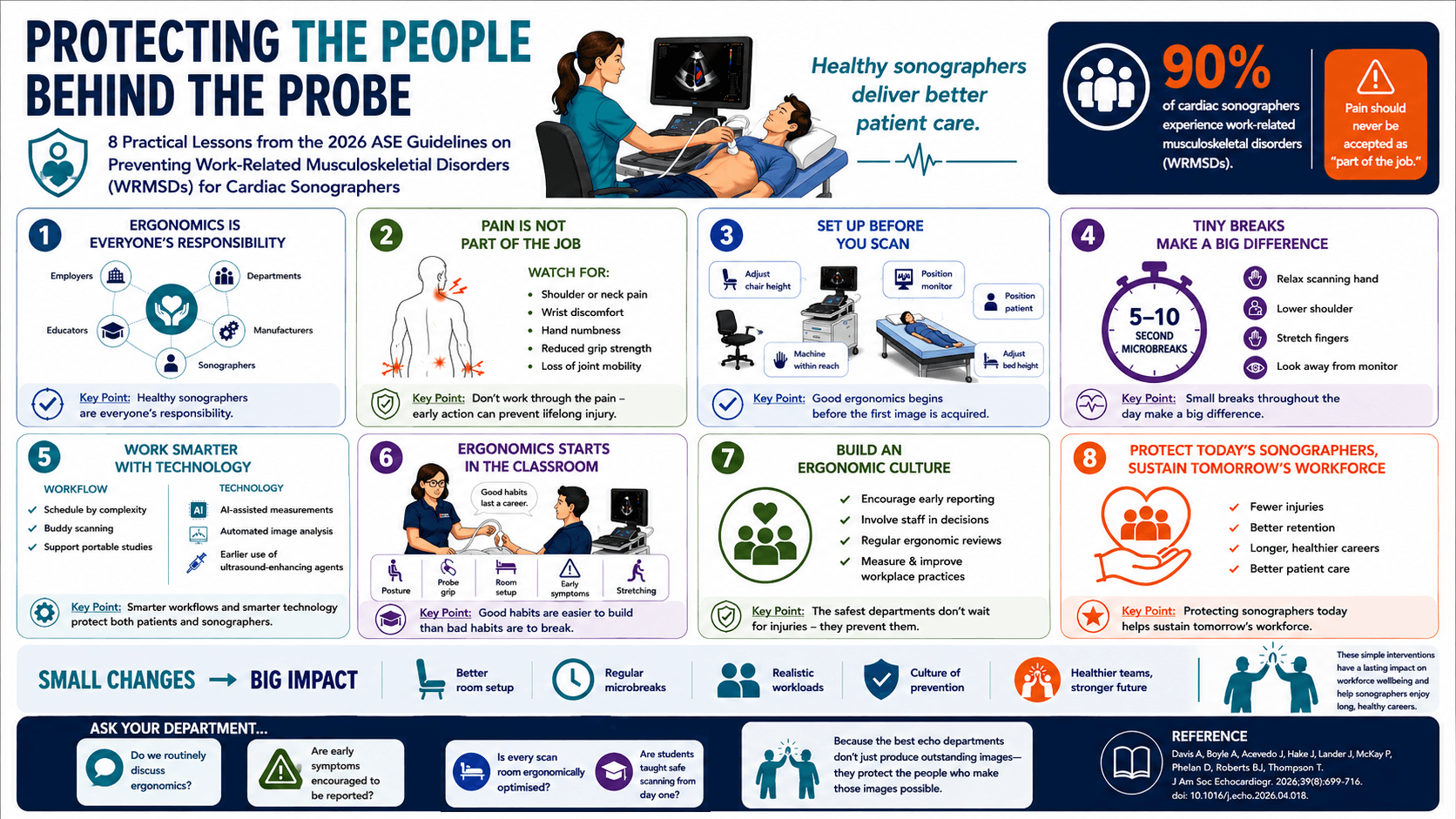
Every echocardiogram depends on a skilled sonographer - but who is protecting the person behind the probe?
Work-related musculoskeletal disorders (WRMSDs) affect up to 90% of cardiac sonographers, yet many still accept shoulder, neck and wrist pain as "part of the job". They shouldn't.
The new American Society of Echocardiography (ASE) Guidelines for the Prevention of Work-Related Musculoskeletal Disorders for Cardiac Sonographers provide practical recommendations to reduce injury risk and support longer, healthier careers.
Here are Top 8 Takeaways | |
| Ergonomics is Everyone's Responsibility |
Preventing WRMSDs is a shared responsibility. Employers, educators, equipment manufacturers and sonographers all play a role in creating safer workplaces through ergonomic equipment, realistic workloads and a culture that prioritises staff wellbeing. | |
| Key Point: Healthy sonographers are everyone's responsibility. |
| Pain is NOT Part of the Job |
Shoulder, neck and wrist pain should never be accepted as "part of the job". Early symptoms are often the first warning sign of injury, and prompt reporting allows changes before problems become chronic. Watch for: shoulder or neck pain, wrist discomfort, hand numbness, reduced grip strength or loss of joint mobility. Departments should also encourage early reporting and create supportive pathways for ergonomic assessment before symptoms become disabling. | |
| Key Point: Don't work through the pain - early action can prevent lifelong injury. |
 | Set Up Before You Scan |
Spend one minute setting up before every examination. Adjust the chair and bed, position the patient close to you, align the monitor and bring the ultrasound machine within easy reach. Small adjustments repeated throughout the day can significantly reduce cumulative strain | |
| Key Point: Good ergonomics begins before the first image is acquired. |
 | Tiny Breaks Make a Big Difference |
Microbreaks of just 5-10 seconds help reduce muscle fatigue and repetitive loading. Relax your scanning hand, lower your arm, stretch your fingers or simply look away from the monitor while repositioning the patient. | |
| Key Point: Small breaks throughout the examination make a big difference. |
 | Work Smarter with Technology |
Better workflow reduces injury. Schedule examinations according to complexity—not simply scan numbers—and use flexible protocols, buddy scanning and additional support for portable studies where needed. Technology also helps. AI-assisted measurements, automated image analysis and earlier use of ultrasound-enhancing agents can shorten scan times and reduce repetitive movements. | |
| Key Point: Smarter workflows and smarter technology protect both patients and sonographers. |
 | Ergonomics Starts in the Classroom |
Safe scanning begins before the first day in the echo lab. Students should learn correct posture, probe grip, room setup and early recognition of WRMSD symptoms, while educators’ model good ergonomic habits every day. | |
| Key Point: Good habits are easier to build than bad habits are to break. |
 | Build an Ergonomic Culture |
Ergonomics is more than buying better equipment. Departments should encourage early reporting, involve sonographers in equipment selection, perform regular ergonomic reviews and make injury prevention part of everyday practice. The guidelines also introduce the concept of an Ergonomic Culture Score, encouraging departments to measure and continuously improve workplace practices. | |
| Key Point: The safest departments don't wait for injuries - they prevent them. |
 | Protect Today's Sonographers, Sustain Tomorrow's Workforce |
Investing in ergonomics reduces injuries, improves staff retention and supports high-quality patient care. The ultimate goal isn't simply preventing pain today—it's helping sonographers enjoy long, healthy careers. | |
| Key Point: Protecting sonographers today helps sustain tomorrow’s workforce. |



 | Final Thoughts |
The ASE guidelines remind us that preventing WRMSDs is no longer an individual responsibility—it requires commitment from departments, educators, employers and manufacturers alike.
Small changes—better room setup, regular microbreaks, realistic workloads and a culture of prevention—can have a lasting impact on workforce wellbeing.
As demand for echocardiography continues to grow, protecting the people behind the probe is essential to protecting the future of our profession.
As the guidelines conclude:
"By fostering a culture of safety, promoting ergonomic practices, and advocating for systemic change, we seek to empower sonographers to prioritize their health while delivering excellent patient care."

Questions for your department
- Do we routinely discuss ergonomics?
- Are early symptoms encouraged to be reported?
- Is every scan room ergonomically optimised?
- Are students taught safe scanning from day one?
Because the best echo departments don't just produce outstanding images—they protect the people who make those images possible.
Reference
Davis A, Boyle A, Acevedo J, Hake J, Lander J, McKay P, Phelan D, Roberts BJ, Thompson T. Guidelines for the Prevention of Work-Related Musculoskeletal Disorders for Cardiac Sonographers: Recommendations from the American Society of Echocardiography. J Am Soc Echocardiogr. 2026 Aug;39(8):699-716. doi: 10.1016/j.echo.2026.04.018.
)